
Gold has had a long reign. Centuries-long, in fact. But something is shifting.
The urban Indian woman buying jewellery today is not the same buyer her mother was. She wants pieces that work on a Tuesday morning in a boardroom, a Saturday brunch in Bandra, and a wedding in Jaipur. She wants something that costs less than a gold chain but looks like it cost considerably more. She wants 925 sterling silver jewellery, and the market is finally catching up to her.
This is not a trend. It's a shift in how Indian women define luxury.

Why does Sterling silver make a great choice for daily wear?
Silver jewellery has always been the choice of many, over generations who value quiet luxury, have a distinct sense of personal style versus flaunting their wealth by wearing flashy gold jewellery. It is most definitely the choice of those who possess quiet confidence that doesn’t need to be validated by anyone else.
This 925 silver jewellery is your bestie in terms of value and to bring your uniqueness to the world stage. Wear your personality each day. Love who you are.
The Fashion Trend That Changed Everything
Indian jewellery preferences have historically been tied to investment logic. Gold wasn't just beautiful. It was wealth you could wear.
That logic still holds for a certain kind of purchase. But a new category of buying has emerged: jewellery bought purely for how it looks, how it feels, and how it works across a woman's actual life. According to a 2023 RedSeer report, India's fashion jewellery market is projected to reach $14.9 billion by 2025, growing at 16% annually. The fastest-growing segment is premium fashion jewellery, which sits exactly where well-crafted 925 sterling silver lives.
Three things drove this shift:
First, the rise of the D2C fashion market made it easier to access jewellery that wasn't being made by your local karigaar or stocked by a jewellery conglomerate. Second, Instagram and Pinterest normalised international jewellery aesthetics. Chunky hoops, layered chains, sculptural rings: these weren't originally Indian reference points. They are now. Third, the slow fashion movement created genuine appetite for pieces that are well-made, responsibly sourced, and meant to last. 925 sterling silver, with its 92.5% pure silver content, answers that brief cleanly.

Minimalism vs Statement: Why 925 Sterling Silver Jewellery Wins Both Arguments
The minimalism debate in jewellery is a false binary.
"Minimalist" has been used as a shortcut for "delicate and forgettable." A 2mm gold-plated stacker ring that loses its colour in three weeks is not minimalism. It's just small. Minimalism, done correctly, means a single piece that carries the whole look.
A sculptural silver cuff. A bold geometric pendant on a clean chain. One thing, worn with intention.
925 sterling silver does both modes better than most metals.
For the minimal look: thin bands, clean drops, a single wide cuff against bare skin. Silver's cool tone reads refined without effort.
For the statement look: silver has the structural integrity to hold bold forms. Chunky link necklaces, oxidised carved earrings, layered ring stacks. Pieces that would look overdone in yellow gold sit differently in silver. Cooler. More considered.
The same woman can own both and wear them within the same week. That kind of versatility is what modern buyers are actually looking for.
How to Style 925 Sterling Silver Jewellery for the Office
Office dressing in India is having a genuine identity crisis. The traditional formal uniform is going, replaced by something harder to name: polished, personal, and practical all at once.
925 sterling silver fits this register precisely. It adds presence without noise.
Here is what actually works:
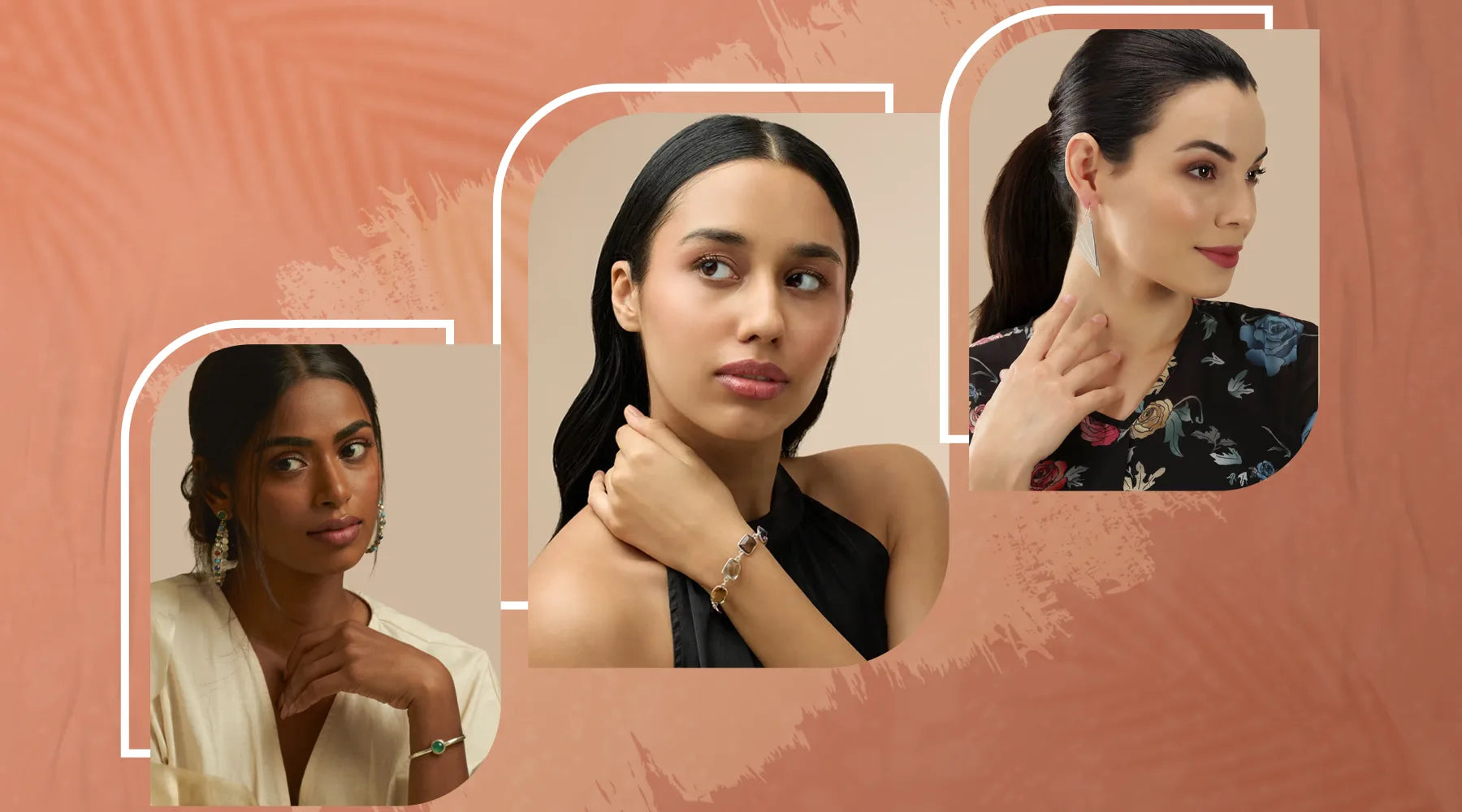
With a blazer and wide-leg trousers: a single architectural cuff on one wrist. Nothing on the other. The asymmetry is intentional. It signals that the jewellery was chosen, not assembled.
With a clean kurta or coord set: a pair of bold drop earrings does the heavy lifting. The outfit stays simple. The earrings carry the personality.
With a shirt dress or formal midi: a pendant on a long chain pulls the look vertical. It's one of the easiest proportioning tricks in styling and silver does it better than gold in daylight.
The rule for office silver: one point of focus. Not three. Pick earrings or a necklace or a cuff. Not all three. The restraint is the style.
Indo-Western Styling: Where 925 Sterling Silver Jewellery Truly Shines
The Indo-western outfit has been waiting for jewellery that understands it.
Traditional gold feels heavy against a crop-top lehenga or a draped dhoti pant. Costume jewellery looks exactly like what it is. But 925 sterling silver, especially in oxidised or handcrafted finishes, carries the cultural weight without the literal weight.
Consider the specific combinations that work:
A silk kurta in a muted tone with chunky oxidised silver hoops and a single stack of thin silver rings. Traditional fabric, contemporary proportions.
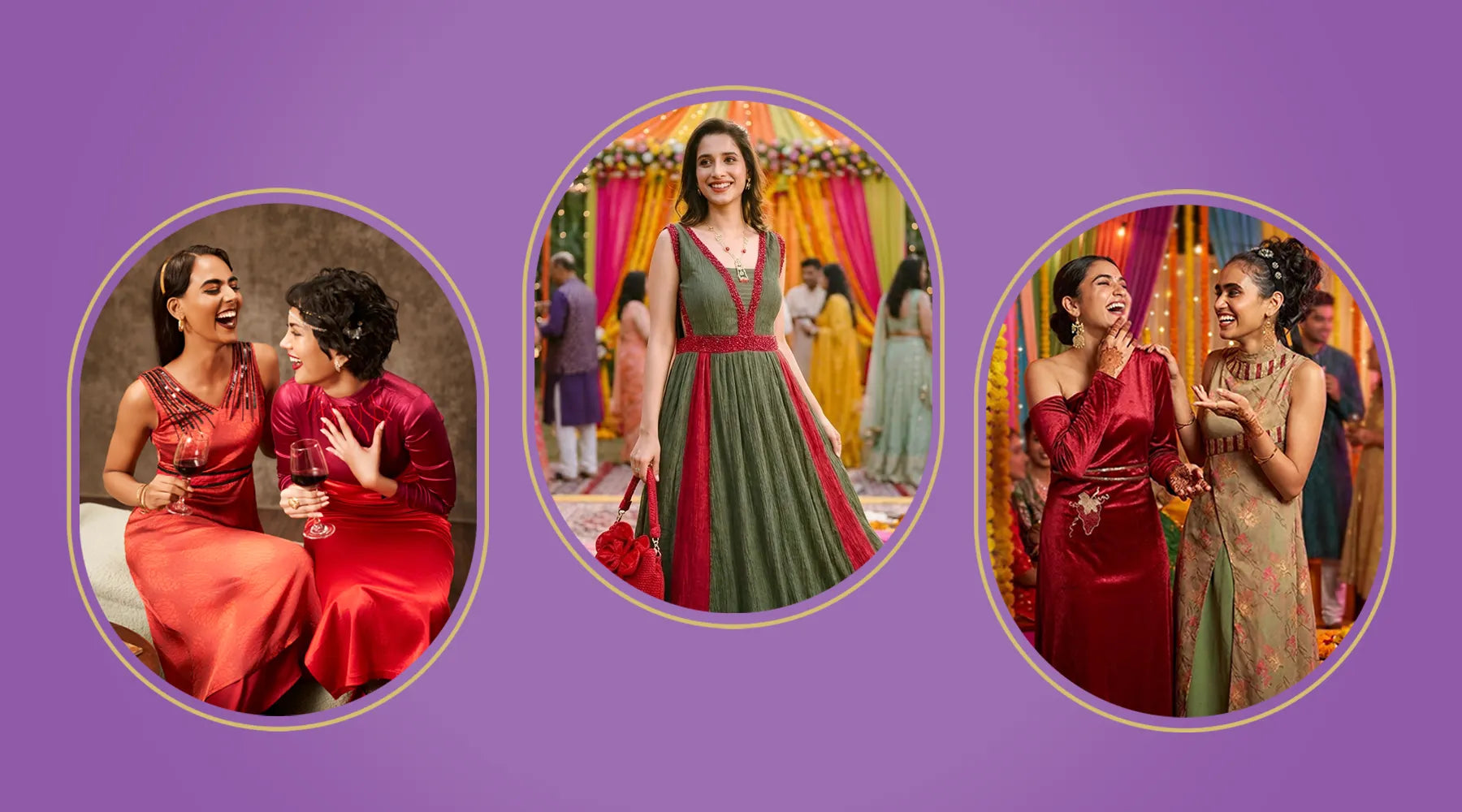
A printed anarkali with sterling silver jhumkas in a modern flat form rather than the traditional bell shape. Same silhouette reference, updated execution.
A sharara set with sculptural silver hand cuffs instead of bangles. The material reads Indian. The form reads global.
This is where 925 sterling silver jewellery from brands like IshqME fills a gap that neither the traditional jeweller nor the fast fashion brand could. It is well-made enough to stand up to Indian textiles. It is designed thoughtfully enough to not look borrowed from another aesthetic.
Celebrity Style and the Rise of Statement Silver
The celebrity shift to silver is not accidental. It's a deliberate styling signal.
Deepika Padukone has been spotted in silver across multiple international appearances, pairing minimal sterling pieces with both Indian and Western looks. Alia Bhatt's off-duty styling consistently favours cool-toned metal over warm gold. Sobhita Dhulipala, arguably the most referenced style figure among fashion-conscious Indian women right now, has made oxidised and contemporary silver a consistent part of her wardrobe.
What these women share: they are not wearing silver because it is cheaper than gold. They are wearing it because it photographs differently, sits differently, and signals something different. Silver reads directional. Gold reads inherited.
That distinction matters to a certain buyer. The woman who follows these women is not primarily making a financial calculation. She is making a style statement. And the piece she reaches for is increasingly a 925 sterling silver statement piece, not a gold one.

Why 925 Sterling Silver Specifically
Not all silver jewellery is 925 sterling silver, and the difference matters.
Pure silver (999) is too soft for most jewellery. It bends, scratches, and loses its form quickly. The 925 standard, 92.5% pure silver alloyed with 7.5% copper or zinc, was developed specifically to solve this. It is strong enough to hold intricate forms, durable enough to wear daily, and pure enough to be hypoallergenic for most skin types.
Silver-plated jewellery, by contrast, is a base metal with a thin silver coating. It tarnishes faster, wears through in months, and cannot be easily restored. The price gap between plated and sterling is real, but so is the quality gap.
When you buy 925 sterling silver jewellery, you are buying a piece that will last years with basic care. That is the actual luxury argument. Not the price. The longevity.
The Case for Silver Is Already Closed
The modern Indian woman does not need permission to choose silver over gold. She already has. The question now is not whether to buy sterling silver, but which pieces are worth owning.
A well-chosen 925 sterling silver statement piece, from a brand that designs with intention and sources responsibly, will outlast three rounds of fashion trends and look better for it.
Featured in This Blog
Three-Layer Amethyst Ring
Silver Cuff Bracelet
Geometric Shapes Dangler Earring
Stone Drop Choker
Layered Pink Cubic Zirconia Stud
Amethyst Silver Dangle Earring
Double U Earring
Dragonfly Pendant Silver Necklace
Etched Silver Charm Dangler Earring
Double Line Ring
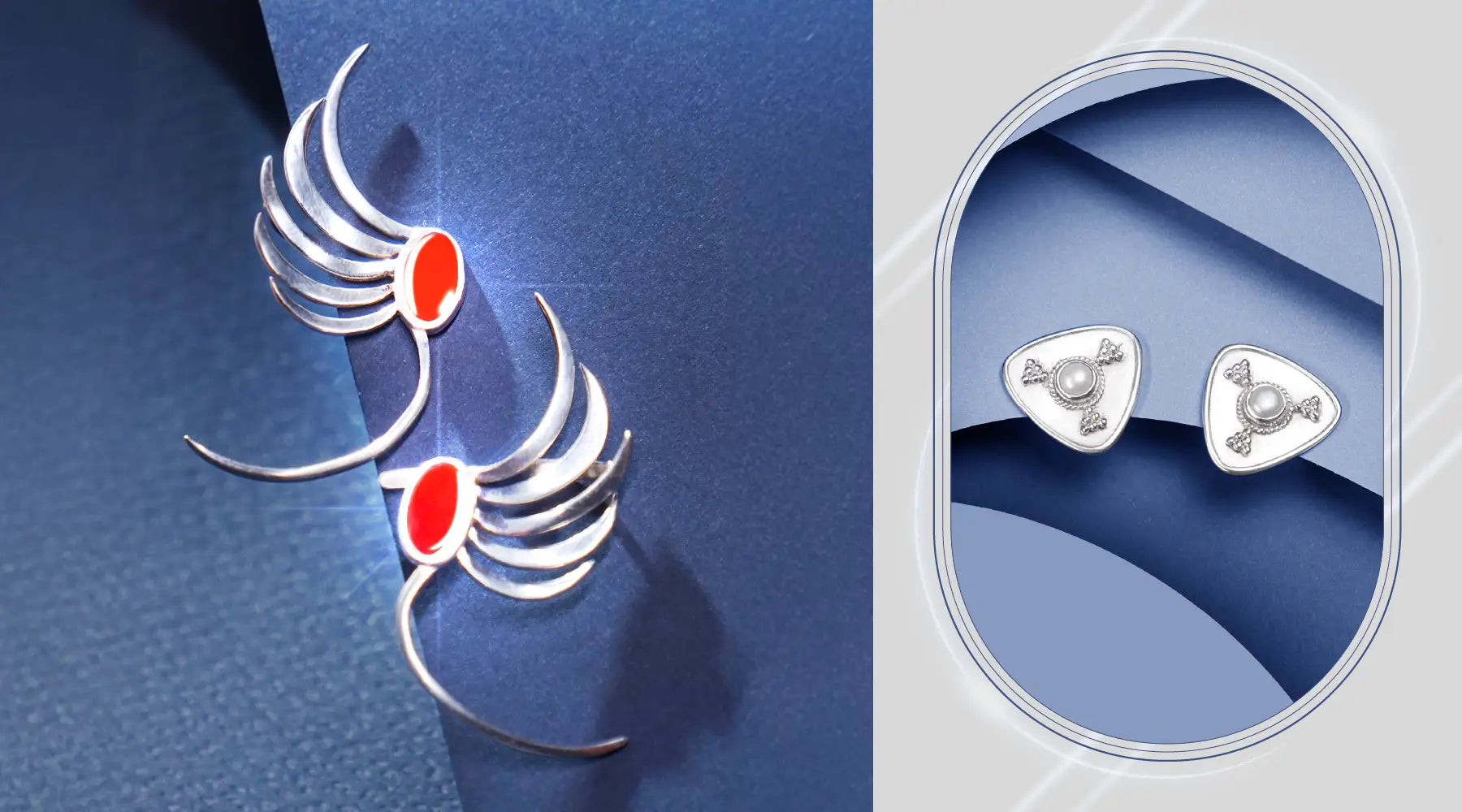
Flame Curve Cuff Earring
Flower Drop Earring
Triangular Pearl Stud Earring
Green Onyx Layered Statement Stud
Silver Blue Enamel Necklace
Silver Kada Rose Quartz Bracelet
Share:
Your complete guide to 925 sterling silver jewellery: How to identify, Style and care for it.
Gold vs Silver: Which Is Better For Indian Weather?